
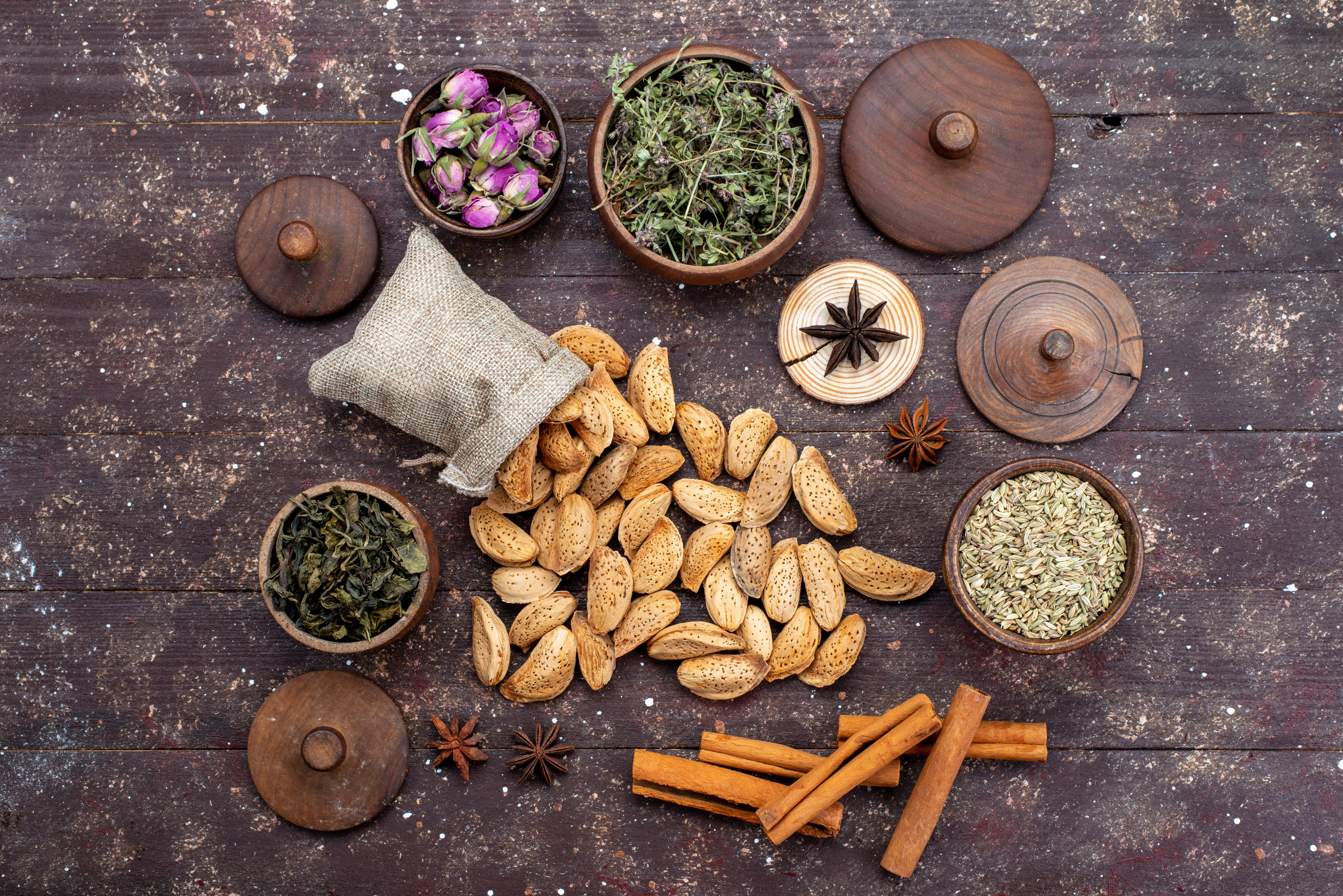
Most “top Ayurvedic herbs” lists repeat the same five names: turmeric, neem, ashwagandha, tulsi, amla. All genuinely useful, none of them actually require the Himalayas to grow. This list only includes herbs that do.
Himalayan Ayurvedic herbs share one thing generic lists skip entirely: altitude. Several of these plants only thrive above 2,000 metres, in cold, thin air most medicinal plants can’t tolerate.
That specific environment shapes the compounds these herbs produce, and it’s a big part of why Nepal’s position in the Himalayas matters for anyone practicing Ayurveda here.
10 Himalayan Ayurvedic Herbs Worth Knowing
| Herb | Botanical Name | Altitude | Traditional Use |
| Shilajit | Mineral exudate | 1,000–5,000m | Rejuvenation, energy, cognitive support |
| Jatamansi | Nardostachys jatamansi | 3,000–5,000m | Nervous system, sleep, anxiety |
| Kutki | Picrorhiza kurroa | 3,000–4,500m | Liver support, digestion |
| Atees | Aconitum heterophyllum | 2,500–4,000m | Fever, digestive disorders |
| Chirata | Swertia chirayita | 1,200–3,000m | Fever, liver, bitter tonic |
| Yarsagumba | Ophiocordyceps sinensis | 3,500–5,000m | Vitality, respiratory support |
| Kashmiri Saffron | Crocus sativus | 1,600–2,200m | Mood, circulation, skin |
| Himalayan Rhubarb | Rheum emodi | 3,000–4,500m | Digestive and skin conditions |
| Timur | Zanthoxylum armatum | 1,000–2,500m | Digestive stimulant, oral health |
| Bhojpatra | Betula utilis (bark) | 3,000–4,500m | Traditional wound care, writing material |
Shilajit: The Mineral Resin, Not Actually a Plant
Shilajit isn’t a herb in the botanical sense. It’s a dark, tar-like substance that oozes from Himalayan rock crevices over centuries as plant material slowly decomposes.
Cleveland Clinic notes that while Shilajit has genuine preliminary research behind it, particularly around fatigue and mitochondrial function, much of the existing data comes from small or older studies.
Ayurveda classifies it as a Rasayana, a rejuvenating substance, and it’s used for a wide range of chronic conditions.
Jatamansi: Nepal’s Own Nervous System Herb
Jatamansi grows specifically in the alpine and sub-alpine Himalayas, at altitudes most plants can’t survive. A study on the species confirms it’s genuinely native to Nepal and now classified as critically endangered due to over-harvesting.
Traditionally used for anxiety, insomnia, and nervous system support, Jatamansi pairs well with the approaches covered in Ayurveda for restlessness and Ayurveda for anxiety treatment.
Kutki: The Liver Herb Few People Outside Ayurveda Know
Kutki grows in rocky Himalayan crevices between 3,000 and 4,500 metres. Traditional use centers on liver support and digestive complaints, and it’s one of the more commonly referenced herbs in Ayurvedic herbs for disease management.
Atees, Chirata, and the Bitter Herbs of Fever Management
Both Atees and Chirata share a genuinely bitter taste profile, which Ayurveda associates with cooling, Pitta-pacifying properties. Traditionally used for fever and digestive upset, both grow wild across Nepal’s mid to high elevation forests and remain difficult to cultivate commercially.
Yarsagumba: The Most Expensive Herb on This List
Yarsagumba, sometimes called Himalayan Viagra in Western marketing, is actually a fungus that grows on a specific caterpillar species at extreme altitude. It commands extraordinarily high prices in Nepal and Tibet, traditionally valued for vitality and respiratory support, though overharvesting has made wild sourcing increasingly difficult.
Kashmiri Saffron, Himalayan Rhubarb, Timur, and Bhojpatra
Kashmiri Saffron grows at comparatively lower Himalayan elevations and is used traditionally for mood and circulation. Himalayan Rhubarb treats digestive and skin conditions in traditional practice. Timur, a Himalayan relative of Sichuan pepper, works as a digestive stimulant common in Nepali households. Bhojpatra, birch bark, holds a place in traditional wound care and was historically used as a writing surface for ancient texts.
A Note on Sourcing and Conservation
Several herbs on this list, Jatamansi and Kutki especially, are formally classified as endangered due to demand outpacing sustainable harvest. Buying from suppliers who source responsibly matters more with these herbs than with common, widely cultivated ones like turmeric or ashwagandha.
This is worth knowing before assuming every “Himalayan herb” product on a shelf is authentic or ethically sourced.
Experiencing These Herbs at Nepal Ayurveda Home
An Ayurveda retreat in Nepal puts these herbs in context that a bottle from an online store can’t replicate, prepared fresh, matched to your dosha, under guidance from a doctor who knows which herb actually fits your constitution. Panchakarma in Nepal incorporates several of these herbs directly into treatment protocols.
Tridosha body types is worth reading first, since herb selection always depends on which dosha needs addressing. Current dates and consultation details are on the booking page.
Frequently Asked Questions
Are Himalayan Ayurvedic Herbs Safe to Take Without a Consultation?
Not always. Several herbs on this list, particularly Atees and Yarsagumba, warrant professional guidance on dosage and suitability, since incorrect use can cause adverse effects, and quality varies significantly between suppliers.
Why Do Himalayan Herbs Grow Only at High Altitude?
Cold temperatures, intense UV exposure, and thin air at high elevation trigger plants to produce specific protective compounds in higher concentrations, which is part of why these herbs differ chemically from lower-altitude relatives.
Is Shilajit the Same as a Regular Herb Supplement?
No. Shilajit is a mineral-rich resin exuded from rock, not a plant extract, which is part of why its composition and effects differ from typical botanical supplements.
Can I Buy Authentic Himalayan Herbs Outside Nepal?
Some are available internationally, though sourcing quality varies widely, and several herbs like Jatamansi and Kutki face genuine overharvesting pressure, making verified, responsibly sourced suppliers worth seeking out specifically.
Do These Herbs Get Used During a Panchakarma Retreat?
Yes, several are incorporated into treatment formulations based on individual consultation, chosen according to the specific dosha imbalance and condition being addressed rather than used generically for every guest.