
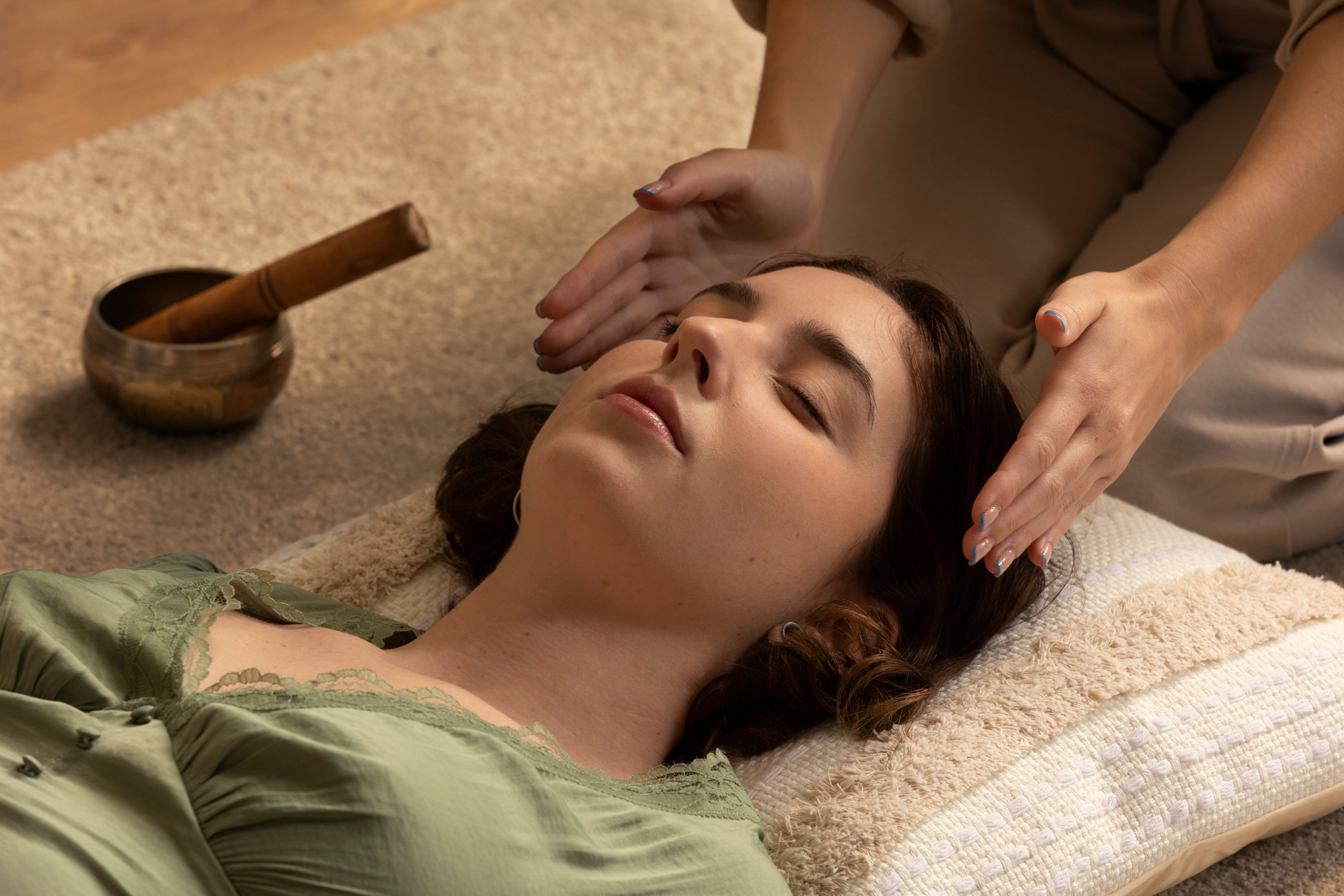
Panchakarma for stress is one of the more testable claims in Ayurveda, because stress leaves measurable traces in the body.
Cortisol, heart rate variability, and blood pressure all move in predictable ways under chronic pressure, which means a treatment claiming to lower stress can actually be checked against data rather than taken on faith.
An estimated 18.1 percent of US adults experience an anxiety disorder in a given year, according to the National Institute of Mental Health.
That’s roughly 40 million people, and a large share of them are looking for something beyond medication alone.
Short answer: Panchakarma for anxiety works primarily by lowering cortisol and shifting the nervous system out of sympathetic overdrive, through a specific combination of oil-based therapies, herbs, and a structured detox process.
What Happens in the Body During Chronic Stress
Chronic stress keeps the hypothalamic-pituitary-adrenal axis, the HPA axis, switched on longer than it should be. That keeps cortisol elevated well past the point where it’s useful.
Sustained high cortisol is linked to:
- Poor sleep and early waking
- Digestive disruption and appetite changes
- Muscle tension and elevated blood pressure
- Reduced ability to concentrate or regulate mood
Ayurveda describes this same pattern as aggravated Vata affecting the nervous system, a framework that predates the discovery of cortisol by a few thousand years but points at the same underlying problem.
What Panchakarma Actually Involves
Panchakarma isn’t a single treatment. It’s five distinct procedures, and not all of them are typically used for stress and anxiety specifically.
| Procedure | What It Does | Commonly Used for Stress? |
| Vamana | Therapeutic emesis to clear excess mucus | Rarely |
| Virechana | Herbal purgation to cleanse the intestines | Occasionally |
| Basti | Medicated enema targeting Vata | Yes, for anxiety and insomnia |
| Nasya | Nasal application of medicated oil | Yes, directly calms the nervous system |
| Raktamokshana | Controlled bloodletting for skin and inflammation | Rarely |
For stress and anxiety specifically, the protocol usually centers on Basti, Nasya, and a set of preparatory oil therapies rather than the full five-procedure sequence.
What the Research Says About Panchakarma for Stress
The evidence base is smaller than for conditions like digestion or chronic pain, but a few well-designed studies exist.
| Study | Design | Key Finding |
| The Scientific World Journal | Pre/post, 5-day residential Panchakarma program | Significant improvements in depression and perceived social support, sustained at 3-month follow-up |
| Indian Journal of Psychological Medicine | Double-blind, placebo-controlled RCT, 64 adults | Ashwagandha, a core Rasayana herb in Panchakarma protocols, lowered serum cortisol significantly more than placebo over 60 days |
| Yoga-Mimamsa, 2017 | Pilot study, combined yoga and Panchakarma | Quality of life improved across physical, psychological, and social domains after 2 weeks |
So does Panchakarma really reduce cortisol levels?
The direct evidence comes mostly from the herbs used within Panchakarma protocols, particularly ashwagandha, rather than from cortisol measurements taken during the physical procedures themselves.
The procedures appear to work more through nervous system regulation and behavior change than through a single measurable hormone shift.
Which Panchakarma Therapies Target Anxiety Specifically
Three therapies come up consistently in Ayurvedic protocols built for anxiety and chronic stress:
- Shirodhara, a steady stream of warm oil poured across the forehead, shows the strongest reputation for anxiety specifically. Shirodhara’s benefits for anxiety and sleep covers how the therapy affects the nervous system in more depth.
- Abhyanga, full-body warm oil massage, reduces physical tension and supports the parasympathetic shift that stress relief depends on. It’s typically booked as part of an Ayurvedic massage session.
- Nasya, medicated nasal oil, is used specifically to calm an overactive Vata dosha in the head and nervous system.
Who This Isn’t a Substitute For
Panchakarma for stress works best as a complementary approach, not a replacement for clinical mental health care.
- Diagnosed generalized anxiety disorder or panic disorder still needs psychiatric evaluation
- Anyone on psychiatric medication should check with their prescriber before adding herbal Rasayana treatments
- Severe or worsening depression needs professional mental health support alongside, not instead of, Ayurvedic treatment
Ayurveda’s approach to chronic burnout covers a milder, more everyday version of this same nervous system pattern. It is useful for comparing where Panchakarma fits versus where clinical care becomes necessary.
What a Panchakarma for Stress Program Actually Looks Like
Program length shapes what’s realistic to expect.
| Duration | Typical Focus |
| One-week Panchakarma retreat | Initial nervous system reset, sleep and immediate stress relief |
| Two-week Panchakarma program | Deeper detox cycle, more consistent cortisol and mood improvement |
| One-month Panchakarma retreat | Full protocol for chronic, long-standing stress patterns |
A dedicated stress management program is available for anyone who wants a shorter, more targeted format built specifically around stress rather than a general detox.
The three doshas determine which specific oils, herbs, and pacing get used, since a Vata-type anxiety pattern and a Pitta-type stress pattern respond to different combinations.
Current program dates are listed on the booking page.
The Verdict
Panchakarma for stress has a reasonable, if still developing, evidence base behind it.
The strongest data supports Ashwagandha’s effect on cortisol specifically, while the broader Panchakarma protocol shows consistent improvements in depression and perceived wellbeing that in at least one study held steady three months later.
Natural stress relief through Ayurveda works best as an ongoing practice rather than a one-time fix, paired with professional mental health support when anxiety is more than situational.
Frequently Asked Questions
How does Panchakarma help with stress and anxiety?
Panchakarma combines specific oil therapies like Shirodhara and Basti with herbs such as ashwagandha to calm an overactive nervous system and lower cortisol. Research shows improvements in depression scores and perceived stress following structured programs.
Does Panchakarma really reduce cortisol levels?
The clearest cortisol evidence comes from ashwagandha, a Rasayana herb used within Panchakarma protocols, which showed a significant reduction in serum cortisol in a controlled clinical trial. Direct cortisol data on the physical procedures alone is more limited.
Which Panchakarma therapy is best for anxiety specifically?
Shirodhara has the strongest reputation for anxiety, followed by Abhyanga and Nasya. All three work by shifting the nervous system out of sympathetic overactivation rather than sedating it chemically.
Can Panchakarma replace anxiety medication?
No. Panchakarma works well as a complementary approach, but diagnosed anxiety or panic disorders still require professional evaluation, and anyone on psychiatric medication should consult their prescriber before adding herbal treatments.
How long does a Panchakarma program need to be to help with stress?
A one-week program can provide initial relief, particularly for sleep and immediate tension. Chronic, long-standing stress patterns typically need two to four weeks for more lasting change.