
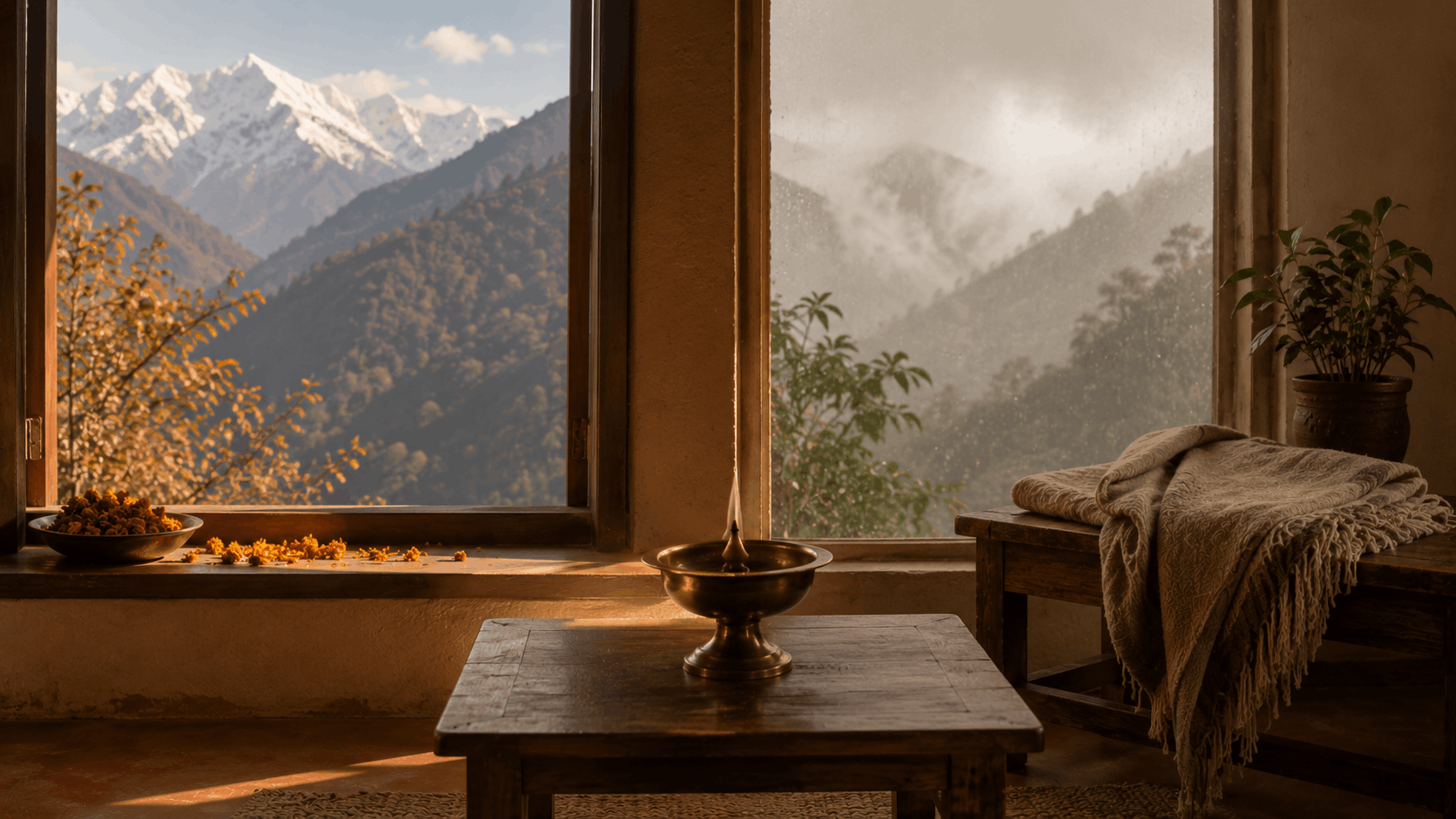
Ayurveda treats the calendar as part of treatment itself. The tradition describes Ritucharya, a seasonal framework built around how digestion and immunity shift through the year. A peer reviewed review on Ritucharya links this seasonal approach to real changes in digestion, immune response and gut bacteria.
Nepal adds its own layer on top of that framework, and the two systems do not always point the same direction. Altitude drops temperatures fast as you climb higher. The monsoon arrives on its own schedule each year, and that schedule decides which months actually suit deep Panchakarma work.
This guide breaks down what each season actually feels like on the ground, then narrows in on the best time to visit Nepal for an Ayurveda retreat depending on what you are hoping to get out of the stay. First time visitors and returning guests often benefit from different windows.
Nepal's Seasons at a Glance
Kathmandu moves through four distinct seasons, and each one shapes what a retreat stay feels like day to day. The Nepal Tourism Board lists average summer temperatures in the valley between 20°C and 35°C. Winter drops to a range of 2°C to 12°C.
| Season | Months | What to Expect |
| Spring | March to May | Warm and dry with clear skies before the rains |
| Summer and Monsoon | June to August | Hot and humid, heaviest rain in July |
| Autumn | September to November | Cooling temperatures and the driest stretch of the year |
| Winter | December to February | Cold nights, sunny days, little indoor heating |
Best Time to Visit Nepal for an Ayurveda Retreat: Autumn and Spring
Autumn and spring come out ahead of the other two seasons for most Panchakarma work. Both sit in a temperature range that supports treatment instead of working against it. Neither the heat of monsoon nor the cold of winter gets in the way here.
September through November brings the most stable weather of the year. Rain drops off fast once the monsoon retreats north. Mornings stay cool without turning cold, and clear skies make daily movement between sessions genuinely comfortable.
March and April offer a similar window on the other side of the calendar. Skies stay clear and daytime temperatures feel comfortable before summer heat builds up. Panchakarma depends on a steady routine more than almost anything else, and unpredictable weather works directly against that.
Oil therapy, fixed meal timing and proper rest all need consistency to actually take effect. A retreat scheduled during autumn or spring rarely forces sudden changes to that routine. That stability is part of why these two seasons dominate bookings for Ayurveda retreats in Nepal.
Late May sits right before the monsoon fully sets in and gets overlooked by most travellers planning around it. Rain is still light most days, and the pre-monsoon heat has not fully built up yet either.
Monsoon Season: What to Expect
Monsoon runs from June through August, with July usually bringing the heaviest rainfall of the year. Rain tends to fall in short, heavy bursts rather than a steady drizzle. Mornings can still open clear even during the wettest weeks of the season.
Ayurveda does not treat monsoon as a season to avoid outright. Some traditional texts actually favour this period for specific cleansing therapies. Humidity is thought to open the body's channels more easily during these months.
Monsoon complicates the logistics around a retreat more than the treatment itself:
- Flights get delayed more often during heavy rain
- Sightseeing plans change at short notice
- General comfort during downtime between sessions can suffer
If your schedule only allows a monsoon visit, treatment still works as intended. Expect the overall experience to feel different from a dry season stay, and pack for humidity rather than heat. Plan for some flexibility around outdoor activities too.
Winter in Kathmandu: Pros and Cons
Winter brings the sharpest contrast between day and night in Kathmandu. Afternoons often stay sunny and mild enough to sit outside comfortably. Nights drop close to freezing, and the lack of central heating in many properties makes that drop feel sharper.
Panchakarma therapies get adjusted specifically for winter conditions. Oil treatments run a little warmer, and recovery periods after each session account for the colder air outside. Ayurveda has always adjusted treatment to the season it is practised in, and winter is no exception.
Winter still has real advantages for the right traveller:
- Crowds thin out considerably during these months
- Mountain views tend to stay sharper on clear days
- The overall pace of a retreat feels quieter with less competing demand
Winter is not the top recommendation for most first time visitors. For anyone who values a quiet stay more than ideal weather, it holds up surprisingly well. Booking during winter also tends to offer more flexibility on dates and room type.
How to Plan Your Retreat Dates
Autumn and spring bookings fill up fastest, simply because more people want the same ideal weather. Booking a few weeks ahead during these two seasons gives you meaningfully more choice over room type and start date. Waiting too long during peak months can limit your options considerably.
Outside peak season, availability opens up a lot. Monsoon and winter dates work well if quiet and lower demand matter more to you than picture perfect weather. Matching your travel dates to your actual goal for the retreat matters more than chasing one single best month on a calendar.
If this is your first Panchakarma retreat, autumn or spring removes one variable from an already unfamiliar process. Returning guests who already know what to expect from treatment sometimes choose monsoon or winter deliberately. Quieter dates and lower demand matter more to them the second or third time around.
Plan Your Retreat Dates with Nepal Ayurveda Home
Ready to lock in dates? The Panchakarma programme, one month Panchakarma retreat, one week retreat and two week retreat all run throughout the year. Availability shifts by season the way this guide has described.
Check current dates on the booking page before settling on a specific window, since exact availability changes faster than general seasonal patterns do. Panchakarma cleansing therapy covers what the process itself involves once you have picked your dates.
Frequently Asked Questions
What Is the Best Month for a Panchakarma Retreat in Nepal?
Autumn, September through November, and spring, March through April, are generally favoured for Panchakarma. Both offer mild temperatures and clear skies, conditions that suit both treatment and daily travel around Kathmandu.
Is Monsoon a Bad Time for an Ayurveda Retreat in Nepal?
Not necessarily. Ayurveda traditionally favours monsoon for certain detox therapies. Heavy rain can affect sightseeing plans and comfort during downtime between sessions though.
Can I Do Panchakarma in Nepal During Winter?
Yes. Cold mornings and evenings in Kathmandu mean some therapies get adjusted for the temperature, and warmer clothing is worth packing for the stay.
Does the Season Affect the Retreat Price?
Peak seasons like autumn see higher demand for popular dates. Booking ahead is worth considering if you have specific dates in mind, especially during September through November.
How Far in Advance Should I Book My Retreat Dates?
A few weeks ahead is usually enough. Popular autumn and spring dates fill up faster than the rest of the year, so confirming early through the booking page is worth it.