
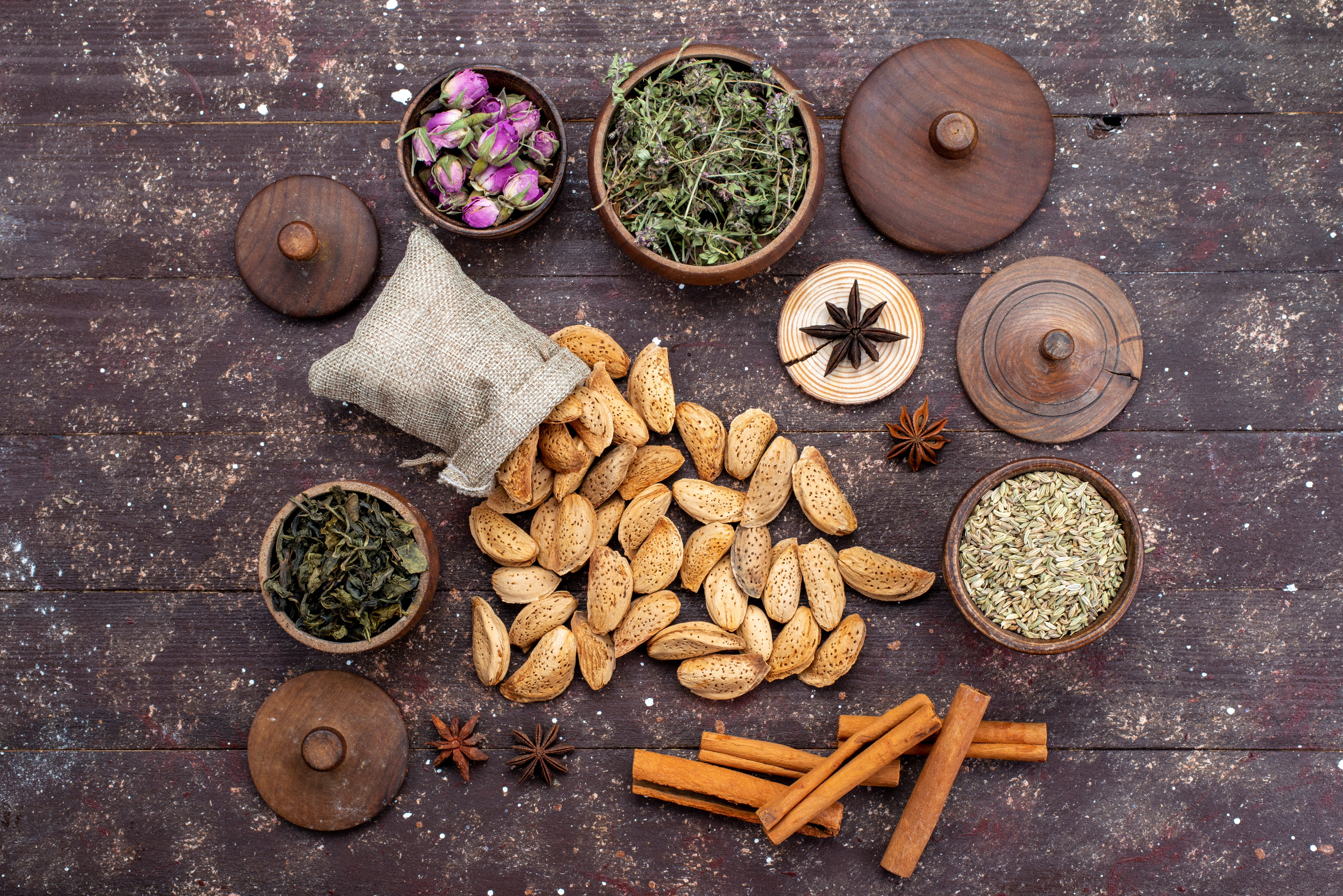
Ashwagandha benefits get big claims online, but the research supports only some of them. NIH's Office of Dietary Supplements says studies suggest it might reduce stress and anxiety and improve sleep a little, and it adds that more research is needed.
Ayurveda treats the root as a Rasayana, a rejuvenating herb. This guide covers what the research shows, the doses studies used, the side effects, including rare liver injury, and who should avoid it.
What Is Ashwagandha in Ayurveda?
Ashwagandha (Withania somnifera) is a shrub whose root Ayurveda uses as medicine. The name joins ashwa, horse, and gandha, smell, because the root smells like a horse, and tradition also promises horse-like strength.
Ayurveda describes the root this way:
- Taste: bitter, astringent, and sweet
- Potency: warming (Ushna virya), so people with strong Pitta heat may feel too hot
- Doshas: it calms Vata and Kapha
- Traditional roles: Rasayana (rejuvenation), Balya (strength), and sleep support
- Forms: ashwagandha powder (churna), Ashwagandharishta, medicated ghee, lehya, and modern capsules
It sits among the best-known roots in top Himalayan Ayurvedic herbs. Rasayana therapy of Ayurveda explains how Ayurveda uses rejuvenating tonics.
Ashwagandha Benefits and the Research Behind Them
Most research tests standardized root extracts, not the whole root, so the results do not map exactly onto traditional use. This table shows where each claim stands.
| Area | What Research Found | Strength |
| Stress and cortisol | A 64-adult trial found lower cortisol and stress scores than placebo, and several 6 to 8 week studies agree | Moderate |
| Anxiety | A 2022 taskforce provisionally recommends root extract for generalized anxiety disorder but wants more data | Early to moderate |
| Sleep | A 2021 meta-analysis of five trials found a small benefit | Small |
| Menopause symptoms | One 100-woman trial over 8 weeks | Early |
| Memory, muscle, fertility | Small studies | Early |
Ashwagandha for Stress, Anxiety, and Cortisol
A double-blind trial in the Indian Journal of Psychological Medicine (2012) gave 64 adults with chronic stress 300 mg of root extract twice a day for 60 days.
The ashwagandha group had significantly lower serum cortisol (p = 0.0006) and stress scores (p < 0.0001) than the placebo group, and side effects stayed mild.
The NIH fact sheet sums up several 6 to 8 week studies that found less stress, anxiety, fatigue, and sleeplessness, along with lower cortisol. In some studies, 500 to 600 mg a day worked better than lower doses. Ayurveda for burnout covers the wider stress picture.
Ashwagandha for Sleep
A 2021 meta-analysis in PLOS ONE pooled five randomized trials and found a small but significant improvement in sleep. The effect looked strongest in people with insomnia, at 600 mg a day or more for at least 8 weeks.
Some people feel drowsy after a dose, which can help at bedtime. Ayurveda for insomnia explains the Vata pattern behind many sleepless nights.
Ashwagandha for Menopause Symptoms
A 2021 trial in the Journal of Obstetrics and Gynaecology Research gave 100 perimenopausal women 300 mg twice a day for 8 weeks.
Total Menopause Rating Scale scores fell more than on placebo (p < 0.0001). One trial cannot settle the question, and Ayurveda for menopause covers the full evidence.
Other Claims With Thinner Evidence
The Sleep Foundation lists memory, energy, muscle strength, arthritis pain, depression symptoms, and male fertility as possible benefits.
These come from small studies, and the NIH says the health effects of ashwagandha extracts have not been thoroughly studied. Ayurvedic approach to increasing libido and Ayurveda for anti-aging cover the traditional side of those uses.
Ashwagandha Dosage and How to Take Ashwagandha Safely
No official dose exists, so use the studied ranges as a guide:
- Standardized root extract: most trials used 300 to 600 mg a day, often split into two doses, for 6 to 8 weeks. Across trials, the NIH reports doses from 240 to 1,250 mg a day.
- For sleep: benefits looked best at 600 mg a day or more for at least 8 weeks.
- Whole root powder: Ayurvedic practice commonly uses about 1 to 6 grams a day, often with warm milk at night. Powder and standardized extract are not interchangeable.
- Timing: most studies did not name a best time. If ashwagandha makes you drowsy, take it near bedtime.
- Start low: begin with the lowest dose on the label and take it with food.
- Quality: the FDA does not closely monitor supplements, so choose products with third-party testing.
- Duration: studies found no safety concerns for up to about 3 months, but longer use is unproven.
Ashwagandha Side Effects You Should Know About
Common ashwagandha side effects are usually mild: upset stomach, loose stools, nausea, and drowsiness.
Liver injury is rare but real. A 2020 case series in Liver International described five people with ashwagandha-linked liver injury:
- All five developed jaundice 2 to 12 weeks after they started.
- The injury was cholestatic or mixed, and itching and jaundice lasted from 5 to 20 weeks.
- Liver tests returned to normal within 1 to 5 months in four patients, and none developed liver failure. One patient was lost to follow-up.
- The three Icelandic cases took 450 to 1,350 mg a day.
Stop taking it and call a doctor if you notice yellow skin or eyes, dark urine, itching, nausea, or unusual tiredness.
The NIH also notes that ashwagandha may affect the thyroid. Ayurveda for thyroid explains why that matters.
Who Should Not Take Ashwagandha?
Skip it, or get your doctor's approval first, in these cases:
- Pregnancy or breastfeeding
- Thyroid disorders, or a thyroid medicine such as levothyroxine
- Autoimmune conditions
- Prostate cancer
- A history of liver disease
- Medicines for high blood pressure, diabetes, seizures, or immune suppression, or sedatives
Tell every doctor about each supplement you take.
How Ayurveda Uses Ashwagandha Beyond Capsules
Ayurveda rarely gives ashwagandha alone. A physician blends it with other herbs, picks a carrier such as warm milk or ghee, and often gives Rasayana herbs after a cleansing program, once digestion is steady.
Other herbs follow the same logic. Yarsagumba, an Ayurvedic herb covers a rarer Himalayan tonic, and Triphala benefits covers a gentle digestive formula. Ayurvedic herbs for disease management gives a wider overview.
Check Your Ashwagandha Plan With an Ayurvedic Doctor in Nepal
Your dose, form, and timing depend on your dosha, your medicines, and your health history, so a consultation beats guesswork. What to expect at an Ayurvedic consultation in Nepal explains the visit.
Bring these to the appointment:
- Every supplement and medicine you take
- Recent thyroid and liver test results, if you have them
- A note on your sleep, stress, and energy
Frequently Asked Questions
What are the main ashwagandha benefits?
The best-supported ashwagandha benefits are lower stress and cortisol and a small improvement in sleep. Evidence for menopause symptoms, memory, strength, and fertility is thinner.
What is the right ashwagandha dosage?
Most trials used 300 to 600 mg of standardized root extract a day for 6 to 8 weeks. Traditional Ayurvedic practice uses about 1 to 6 grams of root powder, so follow the label or your doctor's advice.
Is it safe to take ashwagandha every day?
Studies report no safety concerns for up to about 3 months, but long-term safety is not clear. Rare cases of liver injury also occurred, so stop and see a doctor if you notice yellow skin or eyes, dark urine, or itching.
Who should not take ashwagandha?
Pregnant and breastfeeding women, people with thyroid or autoimmune conditions, and people with prostate cancer should avoid it unless their doctor agrees. It can also interact with thyroid, diabetes, blood pressure, sedative, and immune-suppressing medicines.
When is the best time to take ashwagandha?
Most studies did not name a best time. If it makes you drowsy, take it near bedtime, as Ayurveda traditionally does with warm milk.