
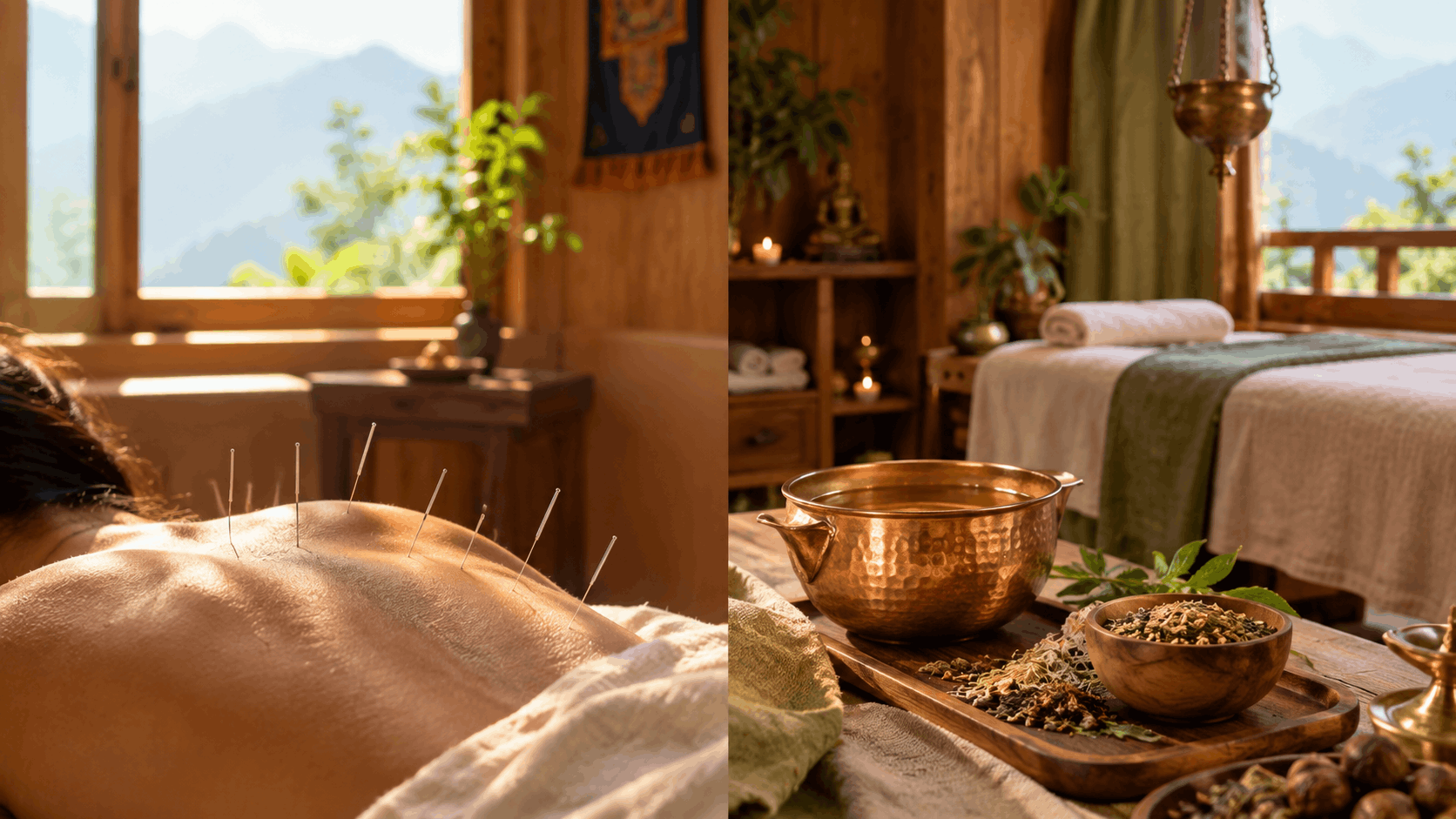
Acupuncture Nepal clinics and Ayurvedic centers often sit under the same roof, sometimes with the same practitioner moving between both. Each system is thousands of years old, but they diagnose and treat the body through genuinely different frameworks.
Acupuncture use among US adults more than doubled between 2002 and 2022, according to NCCIH.
Ayurveda has grown too, and in Nepal it remains the deeper, more established tradition, built around daily routine, herbs, and a personalized reading of the body.
What Is Ayurvedic Treatment in Nepal?
Ayurveda developed in ancient India around three doshas, Vata, Pitta, and Kapha. These govern movement, transformation, and structure in the body, and illness shows up when one falls out of balance.
An Ayurvedic treatment plan always starts with identifying your dominant dosha through pulse reading, physical signs, and a detailed history of habits and symptoms. Two people with the same complaint can walk away with completely different protocols.
From there, treatment layers together. Herbs address the imbalance internally. Diet and daily routine reinforce it. Oil-based therapies work on the nervous system and tissues directly, and the three doshas shape almost every decision made along the way.
What Panchakarma Adds to Ayurvedic Treatment
Panchakarma is where Ayurveda goes beyond diet and herbs into structured detoxification. It uses five specific procedures, including medicated enemas and nasal therapy, to clear accumulated toxins the body hasn’t processed on its own.
For chronic conditions, this matters more than it sounds.
Panchakarma for digestion and Panchakarma for stress and anxiety both address root patterns rather than isolated symptoms, which is part of why Ayurvedic treatment tends to take longer to show results than a single acupuncture session, but often holds for longer once it does.
What Is Acupuncture Nepal Treatment?
Acupuncture developed separately, in ancient China, around Qi, a vital energy believed to flow through meridians. Needles are inserted at specific points to clear blockages in that flow.
A typical acupuncture session in Nepal runs 20 to 40 minutes. Most people feel a mild sensation on insertion, not sharp pain, and results build gradually across several weekly sessions.
Acupuncture vs Ayurveda: Key Differences
| Acupuncture | Ayurveda | |
| Origin | China | India |
| Core theory | Qi and meridians | Doshas |
| Main tools | Needles at specific points | Herbs, diet, oils, Panchakarma |
| Session length | 20 to 40 minutes | 45 to 90 minutes |
| Strongest evidence | Chronic pain, migraines | Stress, digestion, sleep |
What Research Says About Ayurveda
Ayurveda’s clinical research has grown considerably over the past decade.
Ashwagandha, a core Ayurvedic herb used widely in Nepal, showed a significant reduction in serum cortisol in a controlled clinical trial, one of the more replicated findings in the field.
A structured Panchakarma program has also been linked to sustained improvements in depression and social wellbeing. According to research published in The Scientific World Journal. Ayurveda’s approach to burnout and Ayurveda for better sleep both draw on this same evidence base for nervous system regulation.
What Research Says About Acupuncture
Acupuncture’s evidence base leans heavily toward pain. A 2017 clinical guideline listed it as a first-line, non-drug option for chronic low back pain, and a meta-analysis of over 20,000 patients found the pain relief held up well over time.
Neither system has research as extensive as conventional medicine yet. That gap is worth naming honestly rather than glossing over, and it’s part of why a proper consultation matters more than a general comparison.
Ayurveda for Chronic Stress, Sleep, and Digestion
This is where Ayurvedic treatment tends to pull ahead of acupuncture by a clear margin. Chronic stress, poor digestion, and disrupted sleep are rarely isolated problems in Ayurveda. They’re treated as one interconnected pattern rooted in Vata imbalance.
Shirodhara’s benefits for anxiety and sleep shows how a single therapy, warm oil poured steadily across the forehead, can calm the nervous system directly. Combined with dietary changes and herbs, this approach tends to produce results that last well beyond the treatment itself.
Where Acupuncture Fits Best
Acupuncture remains the stronger first choice for localized, physical pain. Joint pain, migraines, and muscle tension respond well to it, often faster than an Ayurvedic protocol built for deeper constitutional change.
It works through the nervous system directly, which explains why its evidence concentrates so heavily around pain rather than broader wellness outcomes.
Combining Acupuncture and Ayurveda in Nepal
This combination is common here, more so than in most Western clinics. Traditional healers in Nepal have long drawn on both Chinese and Indian medical traditions within the same practice.
A practical pairing uses acupuncture for an acute pain flare while Ayurveda works on the underlying stress or digestive pattern feeding into it. Thai Acu Massage blends elements of both directly into a single session.
Safety and Choosing a Practitioner
Quality control matters more than the treatment philosophy itself. A Nepal-based case series in Wellcome Open Research documented harm from adulterated Ayurvedic products, including undisclosed heavy metals, almost always sourced from unregulated suppliers rather than trained practitioners.
Acupuncture carries its own baseline risk if needles aren’t properly sterilized, though this is rare at established clinics. Choosing a licensed, experienced practitioner matters more than which system you pick.
Which Treatment Should You Choose?
For chronic, whole-body patterns like stress, poor sleep, and digestive trouble, Ayurveda offers the deeper and more sustainable path. For sharp, localized pain, acupuncture often brings faster relief.
For anyone unsure where to start, a consultation covering both is the simplest way in. Book a consultation to get a recommendation specific to your symptoms.
Frequently Asked Questions
Is acupuncture or Ayurveda better for chronic pain?
Acupuncture has stronger evidence for chronic pain specifically, including back pain and migraines. Ayurveda can help too, especially when the pain has a digestive or inflammatory root.
What’s the difference between acupuncture and Ayurvedic treatment?
Acupuncture uses needles at specific points to regulate the nervous system. Ayurvedic treatment uses herbs, diet, and oil-based therapies matched to your dominant dosha, often going deeper into root causes.
Can I do acupuncture and Ayurveda at the same time?
Yes. Many practitioners in Nepal combine both, using acupuncture for acute symptoms while Ayurveda addresses the underlying pattern.
Is Ayurveda treatment in Nepal safe?
It’s generally safe with a trained, licensed practitioner. Documented harm has come almost exclusively from unregulated, adulterated products rather than proper clinical care.
How many acupuncture sessions are needed to see results?
Most protocols run weekly for four to six weeks, since the effect builds gradually rather than resolving in one session.