
Migraines are one of the most common health complaints worldwide. The World Health Organization estimates that about 40 percent of adults globally deal with some form of headache disorder.
Ayurveda for migraine looks at why attacks keep happening, not just how to treat one once it starts. Migraine is generally linked to two doshas working together: Pitta, which governs heat, and Vata, which governs the nervous system. When both are out of balance, the head tends to feel it first.
This isn't about replacing medication. It's about understanding what's driving the pattern, so attacks happen less often over time.
Types of Headaches in Ayurveda
Not every headache is a migraine. Tension headaches are usually a Vata issue, felt as dull, band-like pressure, often from stress or bad posture.
Migraines involve both Pitta and Vata. That's why they tend to be throbbing, one-sided, and paired with light sensitivity or nausea. Knowing which one you have matters, because the treatment is different for each.
Ayurveda for Migraine: What Actually Helps
Treatment usually combines a few things at once: head therapies, herbs, and changes to diet and daily habits. No single fix does all the work on its own.
Panchakarma's therapeutic approach to disease explains this layered approach in more depth. The two therapies used most often for migraine specifically are Shirodhara and Shirovasti.
Shirodhara and Head Therapies
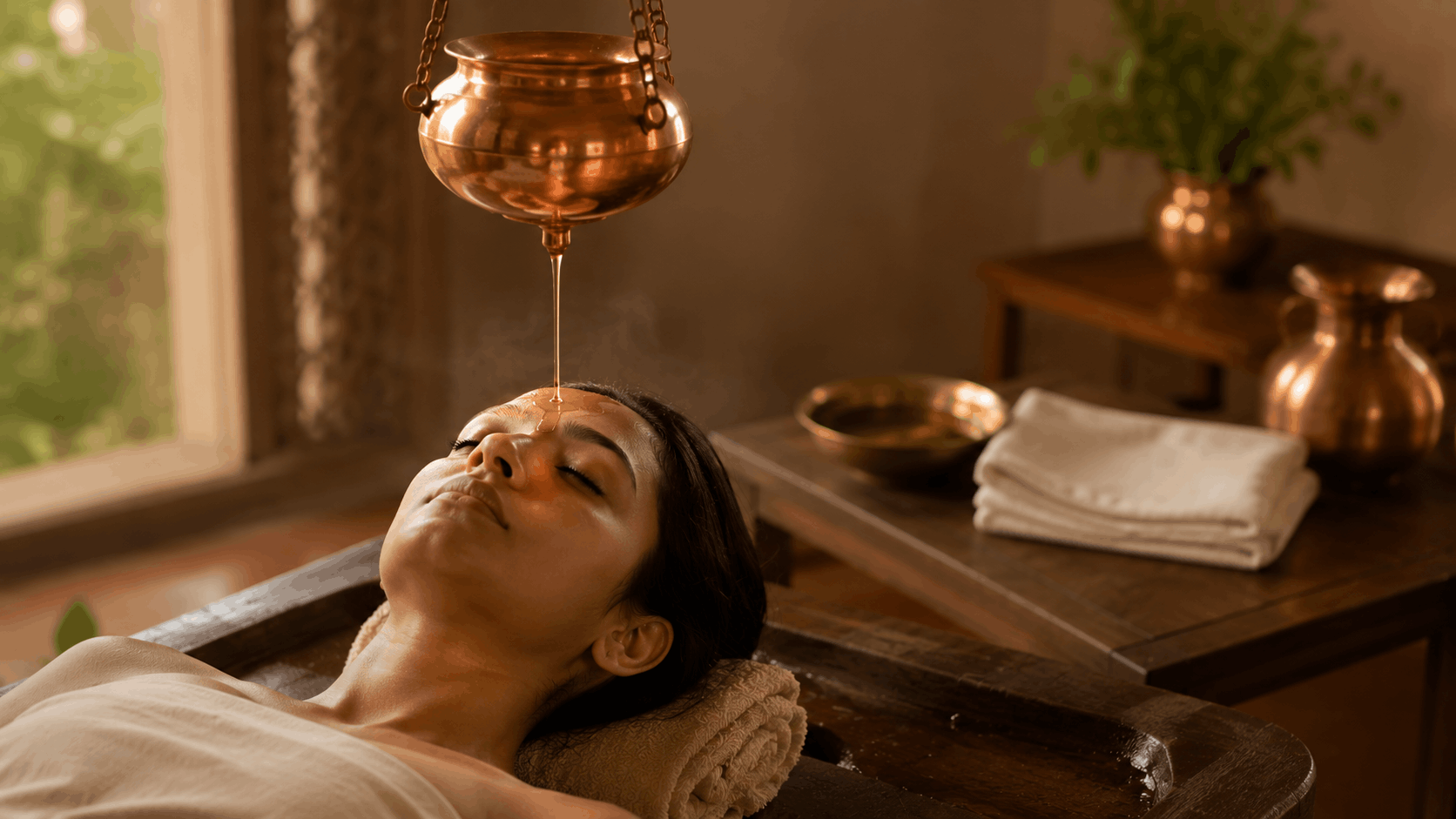
Shirodhara is a warm, continuous stream of oil poured slowly over the forehead. A clinical study found it lowers heart rate and blood pressure, real signs of the nervous system calming down, not just a nice feeling.
That matters for migraine, since an overactive nervous system is part of what keeps attacks coming. Kashaya Dhara uses herbal liquid instead of oil, and Shirovasti holds oil in place for longer. Which one you need depends on your specific pattern.
Herbal and Home Remedies
Herbs generally work on calming Pitta rather than numbing pain directly. Nasya, herbal oil applied in the nostrils, is a common home practice believed to work through the sinuses.
None of this replaces medication during a bad attack. It's for reducing how often attacks happen, not stopping one once it's already started.
Diet and Triggers
Diet plays a bigger role than most people expect. A few things to watch:
- Fermented foods
- Fried or heavily processed food
- Very spicy meals, especially on an empty stomach
- Cold or reheated leftovers
Skipping meals is one of the biggest triggers. It throws off blood sugar and Vata at the same time, which is why migraines often show up after a missed lunch or a long gap between meals.
Stress, Sleep and the Bigger Picture
Poor sleep, stress and too much screen time don't just add up, they compound each other. All three aggravate Vata, and together they create exactly the kind of instability that triggers an attack.
Diet alone rarely works if sleep and stress stay ignored. Insomnia and anxiety often show up alongside frequent migraines, and restlessness is worth ruling out too.
Book a Panchakarma Retreat for Migraine and Stress Relief
For migraines that keep coming back despite diet changes, a retreat gives therapies like Shirodhara time to actually work, daily sessions over consecutive days instead of one appointment. The Panchakarma programme and two week retreat both build this in, and stress management training covers the lifestyle side directly.
For something longer, the one month Panchakarma retreat is also available. Details are on the booking page.
Frequently Asked Questions
Does Shirodhara actually help with migraines?
Yes, for many people. Studies show it lowers heart rate and blood pressure, real markers of the nervous system calming down, which supports its traditional use for migraine and stress headaches. Most people notice results after a full course of sessions, not just one, though this varies person to person.
What triggers migraines according to Ayurveda?
Irregular meals, excess heat or spice in the diet, poor sleep, and stress are the main triggers Ayurveda points to. These usually work together rather than alone, and common modern triggers like screen time and dehydration fit into the same pattern.
Can Ayurveda replace my migraine medication?
No. Ayurveda is meant to work alongside your prescribed treatment, not replace it, especially for severe attacks. It focuses on prevention, reducing how often migraines happen, rather than treating an attack that's already underway.
How many Shirodhara sessions are usually needed?
Seven to fourteen sessions in a row is typical in a Panchakarma setting, though this depends on severity and what's actually causing the migraines. A single session can help temporarily, but lasting results usually need a full course.
Are there foods that worsen migraines in Ayurveda?
Yes. Fermented, fried, very spicy, and reheated leftover foods are generally discouraged, since they tend to aggravate Pitta and Vata together. Skipping meals is just as much of a trigger as any specific food.