
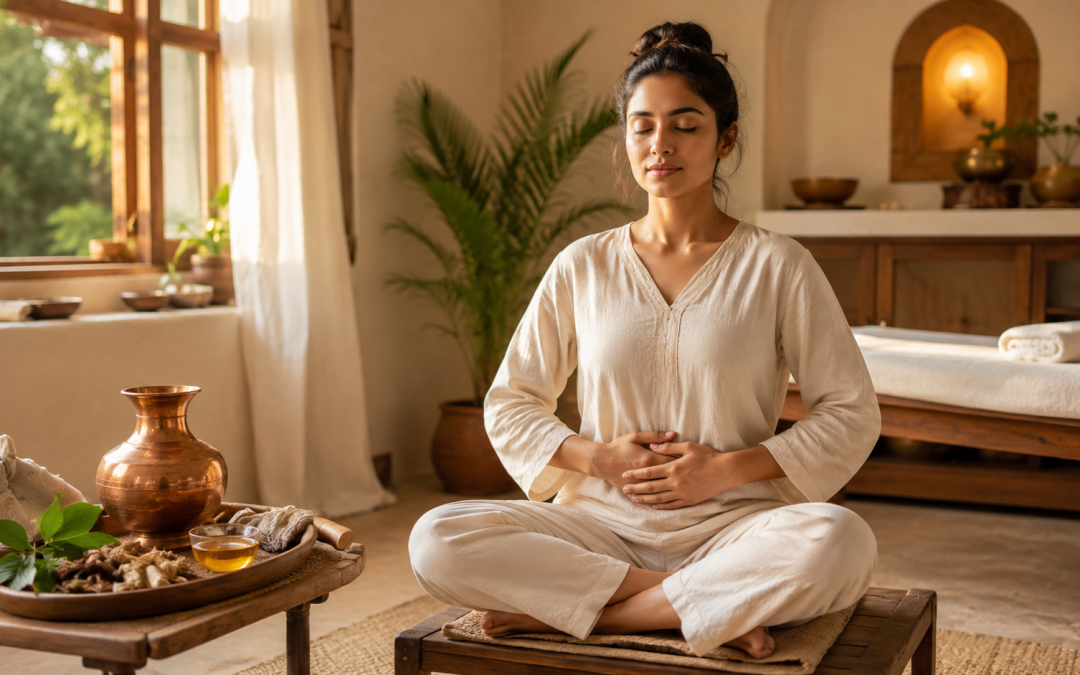
Ayurveda for PCOS keeps coming up in searches because conventional treatment tends to manage one symptom at a time. Ayurveda looks at the hormonal imbalance behind both PCOS and PCOD as one connected issue rather than several separate problems.
PCOS, Polycystic Ovary Syndrome, affects ovulation, insulin regulation and androgen levels together. PCOD is narrower, describing ovaries that release eggs before they mature, which then form small cysts.
The Office on Women's Health puts PCOS at 5 to 10 percent of women aged 15 to 44. Both conditions overlap heavily in symptoms: irregular periods, weight gain, acne, and for some women, the kind of fertility struggles covered in our piece on Ayurveda for Infertility.
The Ayurvedic View: Doshas Behind Hormonal Imbalance
Ayurveda for hormonal imbalance starts with the doshas rather than the ovaries themselves. Kapha builds up in the reproductive tissues while Vata swings erratically, throwing ovulation off schedule, a pattern explained further in our breakdown of Tridosha Body Types.
Both trace back to a weakened Agni, the digestive fire. Once Agni weakens, undigested residue called Ama builds up and blocks the srotas, the channels that feed the reproductive organs.
The National Center for Complementary and Integrative Health recognises Ayurveda as one of the world's oldest medical systems, built almost entirely around this kind of root cause thinking rather than symptom management.
Ayurveda for PCOS and PCOD (Treatment Approach)
So how does Ayurveda treat PCOS? Ayurvedic treatment for PCOS and PCOD usually combines a few things at once rather than relying on a single fix:
- Internal herbal formulations suited to your constitution
- Diet correction to rebuild digestive strength
- A consistent daily routine
- Panchakarma therapies for deeper detox, the process broken down in Panchakarma Cleansing Therapy
This is slower than a prescription, but that's the point. Panchakarma's therapeutic approach to disease works toward a body that regulates itself, not one managed indefinitely from the outside.
Panchakarma Therapies That Help Balance Hormones
Ayurvedic Panchakarma for PCOS usually draws on four therapies, chosen based on your specific imbalance.
- Vamana, supervised emesis that clears excess Kapha
- Virechana, purgation therapy for the digestive tract, useful when Pitta is also aggravated
- Vasti, medicated enema therapy working directly on Vata and the pelvic region
- Nasya, herbal oils through the nose, supporting hormonal pathways near the head and neck
A practitioner decides the sequence based on your constitution, often across a stay structured like Panchakarma in Nepal or, for deeper cases, the One Month Panchakarma Retreat.
Ayurvedic Diet and Herbs for PCOS
A PCOS diet in Ayurveda favours warm, cooked, whole foods. Bitter greens, whole grains and seasonal vegetables help balance Kapha, while refined sugar, excess dairy and fried food are best kept low, the kind of balance our Ayurvedic Diet to Balance Your Doshas walks through.
Shatavari and Ashwagandha are common natural remedies for PCOD, though dosage should always come from a practitioner rather than guesswork, something Ayurvedic Herbs for Disease Management covers properly.
Weight gain is one of the more frustrating parts of PCOD treatment in Ayurveda for a lot of women, frustrating enough that it gets its own space in Ayurvedic Tips for Weight Loss.
Lifestyle, Yoga and Stress Management for PCOS
Daily routine matters as much as diet here. Keep sleep and wake times consistent, since irregular sleep aggravates Vata, and keep movement moderate, since intense exercise can aggravate Vata rather than calm it.
Mayo Clinic has documented how chronic stress worsens insulin resistance and cycle irregularity, both already working against PCOS on their own. Breathwork helps with this, and yogic detoxification on our sister site goes deeper into the practices behind it.
What to Expect at a Nepal Ayurveda Home Retreat for Hormonal Balance
Women researching the best Ayurvedic treatment for PCOS in Nepal are usually looking for something a weekly clinic visit can't offer: daily therapy, a controlled diet, and continuous guidance from someone actually tracking progress.
A typical stay starts with a consultation to assess your prakriti, followed by a personalised Panchakarma plan, structured much like the Two Week Ayurveda Retreat or the more detox focused Yoga and Ayurveda Detox programme.
Explore Ayurvedic Retreats for Hormonal Balance at Nepal Ayurveda Home
If PCOS or PCOD is something you've been managing rather than resolving, it's worth a proper look. Pricing, dates and inclusions all sit on the booking page, and the blog has more on related conditions if you want to read further first.
Frequently Asked Questions
Can Ayurveda cure PCOS completely?
Not exactly a cure. Ayurveda works on managing root causes rather than making that promise. Many women see more regular cycles and fewer symptoms with sustained treatment.
How long does Ayurvedic PCOS treatment take to show results?
Digestion and energy often shift within a few weeks. Menstrual regularity usually takes longer, typically two to three months of consistent care.
Is Panchakarma safe for PCOS?
Yes, when supervised by trained practitioners. Which therapies you get, Vamana, Virechana or Vasti, depends on your specific dosha imbalance.
What foods should I avoid with PCOS in Ayurveda?
Refined sugar, excess dairy, and fried or processed food are the main ones to cut back on. Warm, whole, fibre rich meals are favoured instead.
Can Ayurveda help with PCOS related fertility concerns?
Many women notice improved ovulation and more regular cycles after Panchakarma and lifestyle correction. Results do vary from person to person.