
Yoga Nidra benefits read almost too good to be true until you look at where the claims actually come from.
Researcher Erica Sharpe at SUNY Canton put adults through a single 30-minute session and watched 89 percent of them fall asleep before it ended, while their anxiety dropped by 41 percent in that same sitting. It's a measured result, and it explains a lot about why this practice has quietly taken over sleep science circles and podcast feeds at the same time.
Guests trying this for the first time at an Ayurvedic retreat tend to react the same way almost every time: confusion that something so simple could do so much, followed by genuine surprise at how different they feel afterward.
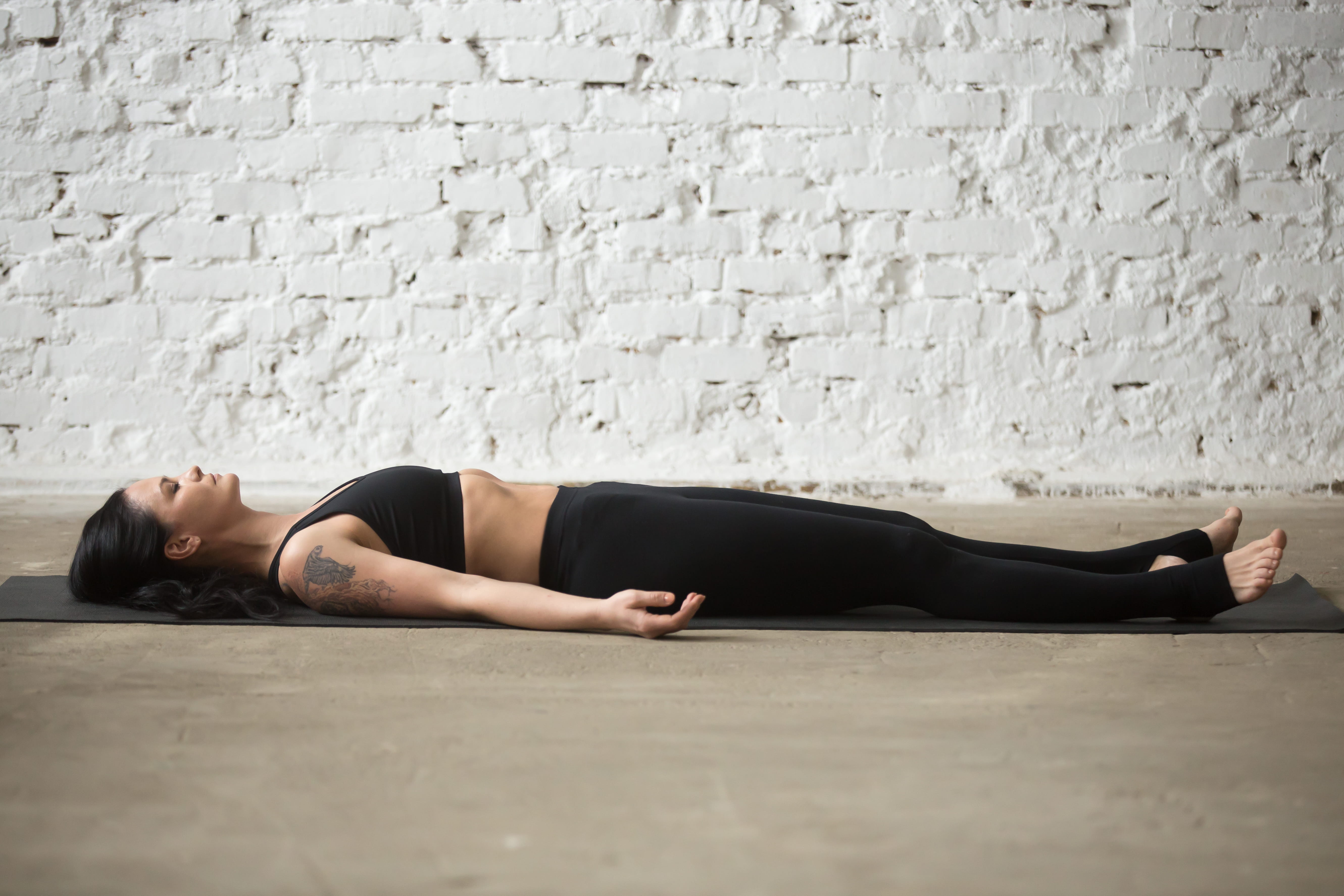
Nobody moves a muscle during the practice. The body lies down, attention follows a voice, and somehow that's the entire mechanism.
What You're Actually Doing for Those 30 Minutes
The name translates to yogic sleep, and it earns it.
A guide walks the practitioner through a fixed sequence while the body stays completely still: a short intention to open with, a slow scan through dozens of points in the body, attention on the breath without changing it, noticing sensations and their opposites like heavy and light, a guided image to move through, and finally a gentle climb back to full alertness.
Falling asleep somewhere in the middle happens to most people, and that's not a sign of doing it wrong. Some teachers design the session expecting it.
Others coach practitioners to hover right at the edge of sleep without crossing over, which turns out to be a far harder skill than it sounds.
The 1976 Manual Behind a Much Older Idea
Swami Satyananda Saraswati wrote down the eight-stage version still taught today in 1976, though the state it aims for shows up in tantric meditation texts dating back to the Upanishads.
He didn't invent anything new. He built a repeatable map toward something practitioners had been reaching for long before anyone thought to write it down.
That map has barely changed since. Walk into a yoga nidra class anywhere in the world today and you'll recognize most of the same stages, just stretched longer or compressed shorter depending on the time available.
Why Everyone Suddenly Knows the Term NSDR
You've probably run into this practice under a different name. Neuroscientist Andrew Huberman started calling it "non-sleep deep rest," or NSDR, on his podcast, and the label caught on fast with an audience that had never considered stepping into a yoga studio.
Here's the part worth understanding clearly: there's no separate research behind NSDR. Every study supporting it is a yoga nidra study wearing a new name. What changed wasn't the practice. It was who felt comfortable trying it once the word "yoga" came off the label.
What Actual Clinical Trials Have Found Regarding Yoga Nidra Benefits
| Study | Population | Key Finding |
| Sleep lab EEG trial, International Journal of Yoga Therapy | 18 adults with insomnia | Measurable drop in respiratory rate during practice |
| Qualitative insomnia study, Sharpe et al. | Adults with sleep complaints | Reduced negative affect and improved perceived relaxation after a single session |
| Walter Reed / iRest feasibility study | Active-duty soldiers with PTSD | Trend toward reduced symptoms over 9 weeks; protocol adopted into standard clinical care |
| University College London RCT | Adults with insomnia and PTSD symptoms | Uses at-home polysomnography to measure real sleep stages, completed 2026 |
| Systematic review, University of Southern Queensland | Mixed clinical populations | Consistent benefit for stress, depression, and anxiety across multiple trials |
None of these researchers claim yoga nidra cures insomnia or PTSD outright, and they say so directly in their own papers.
What keeps showing up, across completely different labs and completely different populations, is the same calming effect on the nervous system.
How It Differs From Sitting Down to Meditate
Seated meditation asks something active of you.
You notice your mind wandering, you bring it back, and you repeat that cycle for the length of the session. Yoga nidra removes that labor almost entirely, since the guide's voice does the steering for you.
The destination is different too.
Classical texts describe yoga nidra as aiming for the narrow gap between waking and sleeping, a state researchers associate with theta brainwave activity.
Seated meditation generally keeps you in a more alert, awake register the entire time. People who've given up on meditation out of frustration often find this version far easier to stick with, simply because there's nothing to fail at.
Where Ayurveda Already Had the Explanation
Long before anyone attached an EEG to a yoga nidra practitioner, Ayurveda had its own account of why deliberate stillness calms an overactive mind.
Ayurveda for better sleep describes this exact pattern as an aggravated Vata dosha, treated through daily routine, herbs, and warm oil rather than a recorded voice.
Shirodhara gets you to a remarkably similar place through an entirely different route: a warm, steady stream of oil poured across the forehead instead of a guided script.
Retreat schedules here often pair the two deliberately now, letting a yoga nidra session afterward stretch out the calm that Shirodhara creates.
Panchakarma for stress and anxiety covers the fuller Ayurvedic model of nervous system overload that modern research keeps independently rediscovering, decades after Ayurveda first described it.
Dinacharya, Ayurveda's daily routine framework, has room built in for exactly this kind of practice, usually slotted into the evening wind-down alongside other Vata-calming habits.
If you're not sure which dosha pattern is actually driving your sleep trouble, a proper dosha assessment is worth doing before building a routine around guesswork, since the three doshas call for genuinely different approaches to rest.
Don't Judge It After One Try
A single session tells you very little about whether this practice will actually work for you.
Every trial behind the numbers above used repeated sessions across several weeks, not a one-off experiment, and that pattern of consistency is what the research keeps linking to lasting change.
Anyone who wants more than a phone app squeezed between meetings tends to get far more out of a full week built around yoga and meditation, where this becomes a daily rhythm rather than a novelty tried once and forgotten.
The instructors running those sessions have usually spent years refining the pacing that makes the difference between a session that relaxes you and one that actually changes your sleep.
If chronic stress sits underneath your sleep trouble, Ayurveda's approach to burnout is worth reading alongside this, since the two problems rarely show up separately.
Panchakarma's broader therapeutic framework can also fold in a yoga nidra component for guests already working through a deeper detox protocol, and booking a consultation is the fastest way to find out if that combination fits your situation.
The Verdict
Strip away the new name, and what's left is a 50-year-old practice finally getting the sleep lab attention it always deserved.
Soldiers, insomniacs, and burned-out professionals keep producing the same nervous-system response across completely independent studies, which is a far stronger foundation than most trending wellness practices ever get.
The 89 percent statistic is what travels fast online. The slower, more interesting story is a decades-old practice that Ayurveda understood on its own terms long before anyone needed an EEG to prove it was real.
Frequently Asked Questions
Is NSDR the same thing as yoga nidra?
Yes, NSDR is simply a rebranded version of yoga nidra. No separate research exists under that name, since every study supporting it was actually conducted on yoga nidra itself.
What actually happens during a yoga nidra session?
You lie still with your eyes closed while a guide leads you through a body scan, breath awareness, and a visualization sequence. Falling asleep partway through is common and doesn't mean you've done anything wrong.
Is yoga nidra the same as meditation?
No, it works differently from seated meditation. Meditation asks you to actively redirect your own attention, while yoga nidra is fully guided and aims for the specific state between waking and sleeping.
Does the research actually support yoga nidra's benefits?
Yes, multiple independent trials support it, though researchers still call the evidence preliminary. Studies have measured reduced respiratory rate, lower anxiety, and improved relaxation, with larger confirmatory trials now underway.
How many sessions does it take to notice real change?
Most clinical studies used repeated sessions across several weeks rather than a single sitting. One session can feel calming right away, but consistency is what the research actually links to lasting results.