
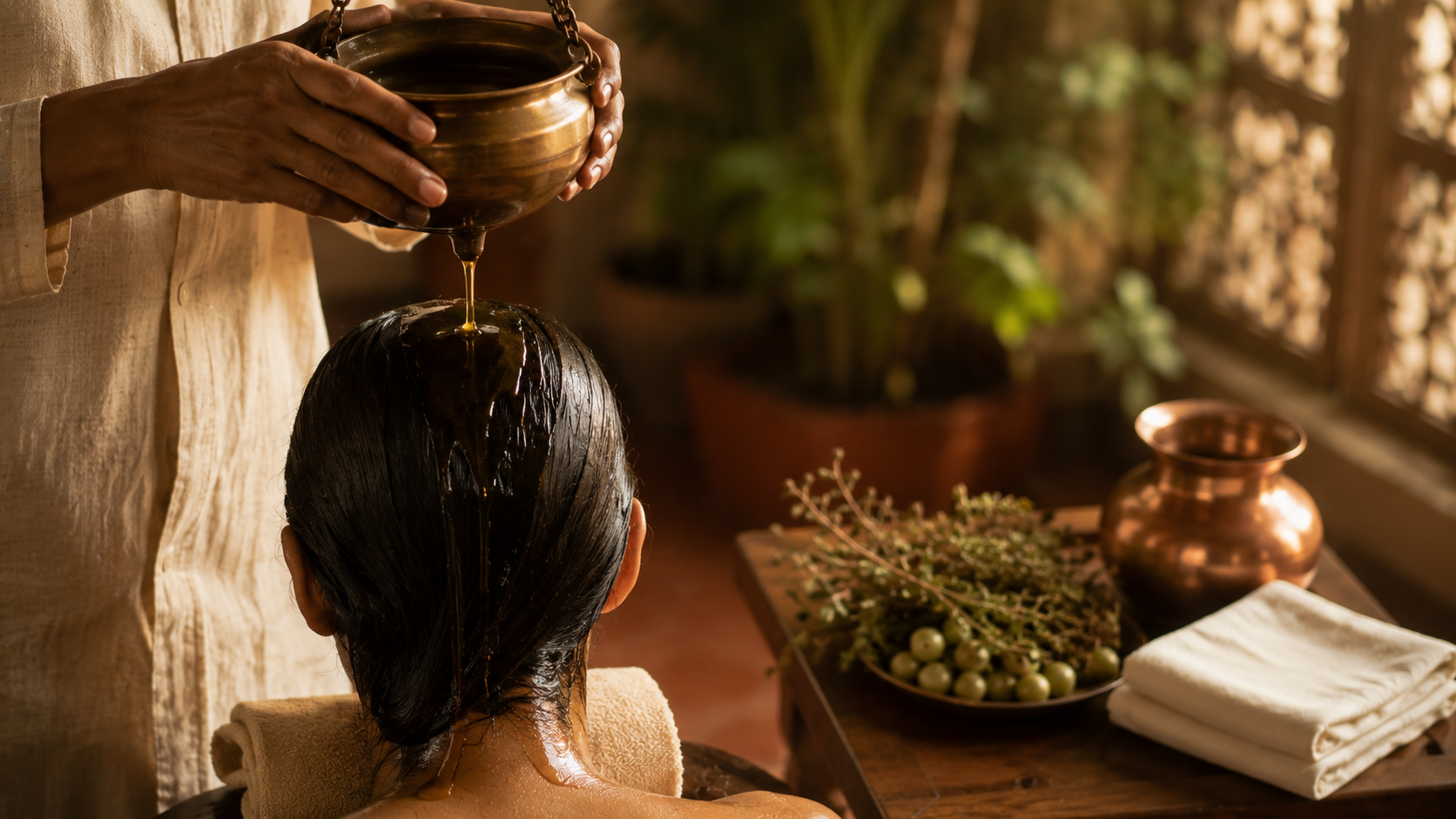
Ayurveda for hair loss starts from a different question than most shampoo aisles do, not which product to try next, but why the hair is falling in the first place. In Ayurvedic terms, hair fall is often linked to aggravated Pitta affecting Rakta, the blood tissue, and the deeper Asthi related tissues that hair is considered an extension of.
Stress, poor digestion and nutrient gaps tend to show up here too, not as separate issues but as things that feed directly into the same imbalance. Androgenetic hair loss alone affects an estimated 50 million men and 30 million women in the US, according to research presented at the American Academy of Dermatology's 2025 Innovation Academy, so the scale of this isn't in anyone's head.
A single serum or oil, however good, rarely solves the whole picture on its own. Causes of hair fall ayurveda identifies rarely sit in one place, which is part of why treatment tends to work across several fronts at once.
Common Causes of Hair Loss According to Ayurveda
Diet, stress, hormonal shifts, poor sleep and excess internal heat are the most commonly cited contributors, and they rarely work in isolation.
- Poor digestion and nutrient absorption, weakening Rakta over time
- Hormonal shifts, particularly around thyroid function, pregnancy and menopause
- Chronic stress and poor sleep, both of which raise Pitta
- Excess internal heat, from diet, climate or lifestyle
- Genetic and age related factors, which Ayurveda doesn't claim to override
Ayurveda for hair loss treatment tends to look at these daily patterns before it looks at any single product. Readers new to the framework behind this can find more background in Tridosha body types.
None of this is meant to alarm anyone. Thinning that happens gradually, without patches or scalp irritation, usually responds well to consistent, patient care rather than urgent intervention.
Ayurvedic Treatments and Therapies for Hair Fall
Ayurvedic treatment for hair fall typically combines scalp therapies, herbal oils, internal formulations and diet correction, rather than relying on any single element. The combination matters more than any one part of it. Scalp therapies work on circulation and Pitta locally, internal formulations work on digestion and the underlying dosha imbalance, and diet either supports or undermines both.
Scalp and Head Therapies for Hair Health
Head focused therapies such as Shirodhara and Shirovasti use warm, continuous oil application to calm Pitta and, in theory, improve circulation to the scalp. Shirovasti holds oil in a contained space around the head for a longer, more concentrated version of the same principle, often used when Shirodhara alone hasn't been enough.
Ayurvedic oil for hair fall is rarely used as a standalone fix. It's usually paired with the internal side of treatment rather than applied and left at that, since oil on its own doesn't address why the hair is thinning in the first place.
Ayurvedic Herbs Known for Hair Growth
Bhringraj, Amla and Brahmi come up constantly in ayurvedic remedies for hair growth, generally credited with supporting scalp circulation, follicle strength and a calmer nervous system respectively. None of these work overnight, and consistency matters more than potency.
How these herbs fit into treatment for other conditions, not just hair, is covered in ayurvedic herbs for disease management.
Diet and Lifestyle Tips for Stronger Hair
An ayurvedic diet for healthy hair leans toward protein, iron and healthy fat, the same nutrients research keeps circling back to outside of Ayurveda entirely. A peer reviewed study on nutritional deficiencies in hair loss found iron and amino acid deficiencies present across nearly all types of hair loss examined, not just one specific pattern.
- Iron rich foods: leafy greens, lentils, dried fruit
- Protein at each meal, not just dinner
- Healthy fats, particularly from nuts and seeds
- Reduced caffeine and late meals, both of which aggravate Pitta
A body running on five hours of sleep and constant cortisol rarely holds onto hair well, regardless of what's on the plate. Sleep and stress management round out the picture as much as any dietary change does.
When Hair Fall Signals a Deeper Imbalance
Persistent or patchy hair loss is different from the gradual thinning covered above, and it's worth naming that difference clearly. Conditions like Alopecia Areata involve a different, autoimmune mechanism entirely, while anaemia related hair loss ties directly back to the iron deficiency link mentioned above.
Patchy or sudden hair loss deserves a proper assessment, not a home remedy. Hair fall causes health concerns that go beyond cosmetics in these cases, and identifying which pattern you're actually dealing with matters more than any single treatment choice.
Book the 2 Weeks Ayurvedic Beauty Care Retreat at Nepal Ayurveda Home
For hair fall tied to broader imbalance rather than a single deficiency, the Ayurvedic Beauty Care Retreat combines Panchakarma detox with dedicated scalp and head therapies over two weeks, a structure a single salon visit or bottle of oil can't really replicate. The Ayurvedic Beauty Care Training programme covers the same therapies in more depth for anyone training rather than receiving treatment, and Panchakarma's therapeutic approach to disease explains how detox and hair health connect more broadly. Ayurvedic massage sessions are also available for anyone wanting to try individual therapies before committing to the full retreat.
Current dates and details are on the booking page, and more hair and skin related topics are covered on the blog.
Frequently Asked Questions
Can Ayurveda regrow hair that has already fallen out?
Results vary. Ayurveda tends to work best on active hair fall and thinning rather than long-bald areas, and consistency over months matters more than any single remedy.
What is the best Ayurvedic oil for hair fall?
Oils infused with herbs such as Bhringraj, Amla or Brahmi are commonly used, massaged into the scalp to improve circulation and calm Pitta imbalance.
Is hair fall always linked to a dosha imbalance?
Not always. Stress, poor diet, thyroid issues and genetics also play a role, so Ayurveda looks at the whole picture rather than the hair alone.
How often should I oil my hair for best results?
Two to three times a week is a common starting point, though a practitioner can tailor frequency to your specific hair and scalp condition.
Can Panchakarma help with hair loss?
Yes. Therapies that detoxify the body and balance Pitta, alongside targeted head treatments, are often included in a broader Panchakarma programme for hair health.