
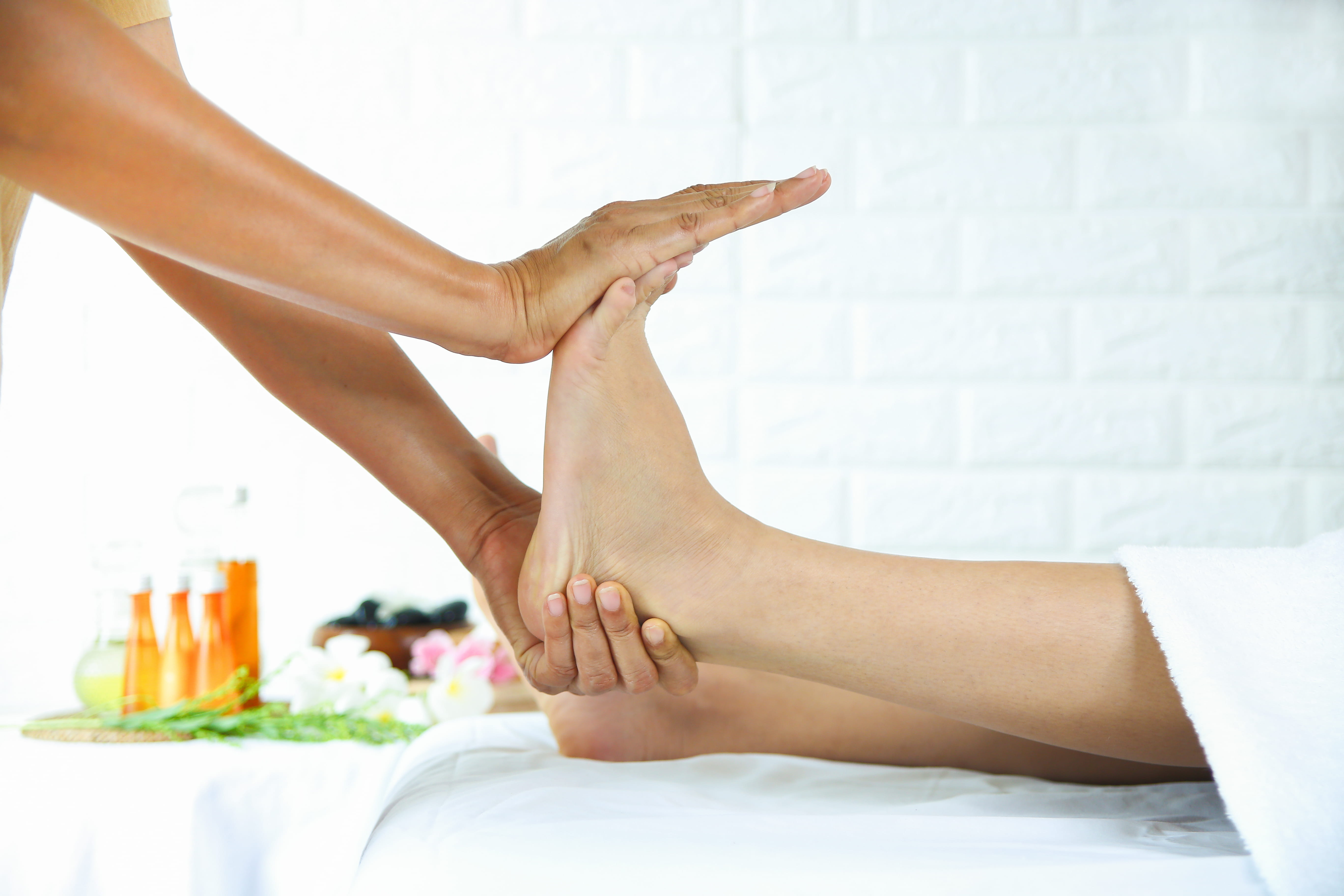
Padabhyanga is a warm-oil foot massage, and Ayurveda treats it as a daily habit rather than a luxury. Classical texts say it eases tired and numb feet, softens dry skin, and helps you sleep. They also claim it brightens the eyes, which sounds odd until you read the reasoning.
This guide covers the classical benefits, the marma points of the foot, what modern research says, the best oils, a step-by-step home routine, and who should be careful. It is a long guide, so use the headings to jump to what you need.
What Is Padabhyanga in Ayurveda?
Pada means foot, and abhyanga means oil massage. Padabhyanga is the foot part of Abhyanga, the full-body oil massage that Ayurveda places inside Dinacharya, the daily routine. Charaka describes it in Sutrasthana chapter 5, and Sushruta and Vagbhata repeat it.
You can do it yourself in five minutes or book a therapist for an hour. Dinacharya for busy professionals shows where a foot massage fits in a working day.
Why Ayurveda Starts With the Feet
Vagbhata compares the human body to an upside-down tree. The roots sit at the top, in the head, and the branches reach down to the feet. The feet carry your weight all day, so they take the most wear.
Ayurveda adds three more reasons:
- Vata lives in the feet and legs. Vata governs movement and the nervous system, and cold, dryness, and long standing raise it. Dry, cracked, numb, or restless feet are Vata signs.
- Skin is the home of touch. Charaka says Vata dominates the sense of touch, and the skin carries that sense. Oil on the skin therefore calms Vata.
- The feet hold marma points. Marma points are sensitive spots where muscle, vessels, nerves, and joints meet. The foot has several, including Kshipra between the big toe and the second toe, Talahridaya in the middle of the sole, and Gulpha at the ankle.
Padabhyanga Benefits According to Classical Texts
Charaka, Sushruta, and Vagbhata list these Padabhyanga benefits:
- Relief from roughness, stiffness, dryness, tiredness, and numbness of the feet
- Softer, stronger, steadier legs
- Clearer vision. Texts call the foot massage Chakshushya, meaning good for the eyes.
- Deeper sleep
- Less Vata, which calms an anxious, restless body
- Fewer cracks in the heels
- Protection from sciatica pain, called Gridhrasi
- Fewer cramps and less tightness in the leg muscles and vessels
These are classical claims, and modern studies have tested only a few of them.
Foot Massage for Sleep, Stress, and Mood: What the Research Says
Foot massage studies exist, though most test reflexology, a pressure technique that targets points on the sole. It is not the same as Padabhyanga, but it shares the touch.
A 2020 meta-analysis in Evidence-Based Complementary and Alternative Medicine pooled 26 randomized trials with 2,366 adults. Foot reflexology significantly reduced depression (Hedges' g = -0.921), anxiety (g = -1.237), and sleep trouble (g = -1.665), and longer sessions and longer courses improved sleep more.
Keep three cautions in mind:
- Study quality varied, and the authors call for stronger trials with longer follow-up.
- A foot massage feels good, and that comfort may explain part of the benefit.
- Reflexology targets pressure points, and Padabhyanga uses oil and gentle strokes.
Ayurvedic trials on Padabhyanga itself are small. A 2020 pilot clinical study tested Padabhyanga, with and without oiling, on Timira, a refractive error similar to blurred vision. It reported statistically significant improvement in subjective symptoms, and the authors called for larger studies.
A 2025 trial protocol at Parul Ayurved Hospital is testing Yoga Nidra plus Padabhyanga for insomnia using the Pittsburgh Sleep Quality Index, and its results are not available yet.
Ayurveda for better sleep and Yoga Nidra benefits pair well with a foot massage at night.
Best Oil for Foot Massage in Ayurveda by Dosha and Season
Pick the oil by your body type, the weather, and your skin.
| Oil | Best For | Notes |
| Sesame | Vata, cold weather, dry cracked skin | Warming, the classic choice |
| Coconut | Pitta, hot weather, burning soles | Cooling and light |
| Ksheerabala or Bala taila | Vata, nerve tiredness, restless legs | Medicated Vata oils; a therapist can recommend one |
| Brahmi oil | Racing thoughts and poor sleep | Calming for the mind. Brahmi oil and its benefits explains it. |
| Ghee | Cracked heels, very dry or Pitta feet | Often used with a bronze bowl in the Kansya Vati method |
| Mustard | Kapha, cold, damp weather | Warming, can irritate sensitive skin, so patch test first |
The Kansya Vati method rubs ghee into the soles with a small bronze bowl. Ayurveda describes it as cooling, and it is popular for sleep and hot feet. No trial has tested it, so treat it as a traditional practice.
Whole body massage with sesame oil explains the base oil in more detail, and the goodness of ghee in Ayurveda explains why ghee suits dry, cracked skin.
How to Do Padabhyanga at Home Step by Step
Do it in the evening, or before bed. Allow 10 to 15 minutes.
- Wash your feet with lukewarm water and dry them well.
- Warm 1 tablespoon of oil by standing the bottle in hot water. Test a drop on your wrist.
- Sit comfortably with one foot resting on the opposite knee.
- Pour a little oil on your hands and spread it over the whole foot, ankle, and lower leg.
- Rub the sole in long strokes from the heel to the toes, using your thumbs.
- Make small, firm circles in the middle of the sole (Talahridaya) for 30 seconds.
- Squeeze each toe, pull it gently, and press between the toes (Kshipra).
- Circle your ankle with your fingertips, then rotate the foot slowly both ways.
- Stroke up the calf toward the knee.
- Repeat on the other foot.
- Wipe off the extra oil with a warm towel, and put on cotton socks so you do not slip.
- Wash your hands, then rest for a few minutes before bed.
A 5-Minute Bedtime Version
- Warm a teaspoon of oil.
- Rub the soles and ankles for two minutes on each foot.
- Wear socks and lie down. Keep the lights low.
Do the short version every night rather than the long version once a month.
Padabhyanga Compared With Reflexology and a Spa Foot Massage
| Padabhyanga | Reflexology | Spa Foot Massage | |
| Method | Warm oil with long, gentle strokes | Pressure on mapped points | Mixed strokes |
| Goal | Calm Vata, nourish skin, ground the body | Trigger effects in other organs | Relaxation |
| Oil | Always | Rarely | Sometimes |
Abhyanga vs spa massage explains the same contrast for a full-body massage.
Padabhyanga for Tired Legs, Standing Jobs, and Trekking
Long hours on your feet raise Vata in the legs, so Padabhyanga fits teachers, nurses, shop workers, and trekkers. After a long walk, warm oil on the feet and calves eases tight muscles, as classical texts describe.
A therapist-led trekkers massage targets the legs and feet after the trail, and Ayurveda after trekking covers recovery in more detail.
Foot Care Tips for Cracked Heels and Dry Feet
- Oil your feet at night and wear cotton socks.
- Soak your feet in warm water for 10 minutes, then dry them well before oiling.
- Rub a little ghee or sesame oil into cracked heels daily.
- Wear shoes that fit, and avoid walking barefoot on hot, dry floors.
- Drink enough water.
- See a doctor for cracks that bleed, swell, or ooze.
Who Should Skip Padabhyanga or Ask a Doctor First?
Skip the massage, and see a doctor, if you have:
- An open wound, blister, ulcer, or skin infection on the foot
- Athlete's foot or a fungal infection
- Fever or an acute illness
- Pain, swelling, redness, or warmth in one calf, which can signal a blood clot
- A recent injury or fracture
Ask your doctor first if you have:
- Diabetes. The American Diabetes Association advises checking your feet every day. Use gentle pressure, keep oil off the skin between the toes, and avoid hot water, since nerve damage can hide burns. Ayurveda on diabetes offers the traditional view.
- Varicose veins or poor circulation
- Pregnancy. Use light strokes, and avoid strong pressure around the ankles unless your doctor approves.
Patch test any new oil on your inner forearm first.
What a Professional Foot Massage Looks Like
A professional session starts with questions about your health and any foot problems. The therapist warms the oil, treats each foot and lower leg with long strokes, thumb work on the sole, and gentle pressure on marma points, and finishes with a warm wrap.
Ask the therapist to match the oil to your skin and the weather. Abhyanga massage Nepal for travelers explains how a full oil massage runs.
Book a 1 Hr Foot Massage Based on Padabhyanga in Nepal
A therapist can tailor oil and pressure to your feet, so tell them about your sleep, skin, and health conditions before you start. Explore the 1 hr foot massage to see the session.
Mention these when you book:
- Any cuts, cracks, or skin infections
- Diabetes, circulation problems, or pregnancy
- Allergies to oils
Frequently Asked Questions
What is Padabhyanga?
Padabhyanga is the Ayurvedic warm-oil foot massage described by Charaka, Sushruta, and Vagbhata. It aims to ease tired, dry, or numb feet, calm Vata, and support sleep.
What are the benefits of Padabhyanga?
Classical texts credit it with softer skin, less fatigue and numbness, fewer heel cracks, better sleep, and clearer vision. Modern evidence is strongest for relaxation, anxiety, and sleep, from studies of foot massage and reflexology, and Padabhyanga trials are small.
Which oil is best for foot massage in Ayurveda?
Warm sesame oil is the usual choice for Vata and cold weather, while coconut oil suits hot, Pitta-type feet. Ghee helps cracked heels, and patch test any new oil first.
Can you do Padabhyanga every day?
Yes, a short daily foot massage is part of classical Dinacharya, and five minutes at bedtime works well. Skip it if you have an open wound, infection, fever, or signs of a blood clot in the leg.
Does foot massage help with sleep?
Studies suggest it can. A 2020 meta-analysis of 26 trials found foot reflexology improved sleep quality, and longer sessions and courses helped more. Padabhyanga trials are still small.